Case Study: A Woman’s Journey from Farmer to Community Resource Person

Background
Mrs. Vors Seila, 38 years old, is a farmer and community committee member living in Chroy Svay village, Chroy Svay commune, Srae Ambel district, Koh Kong province. She is the mother of three daughters and the wife of a 48-year-old factory worker. She completed only six years of formal education.
In late 2023, her community members recognized her dedication and voted her as a Community Committee Member. Seila admitted that she was lacking confidence and had very little knowledge of the law, and no experience in advocacy. Therefore, she found it difficult to raise concerns with local authorities.
“After I was voted as a committee member, I didn’t know which laws protected our environment or what mechanisms existed to solve problems when violations occurred. My family fully supports what I am doing for the community though, even though there is no salary and it can be exhausting” she said.
Building knowledge and confidence
In mid-2024, Seila participated in a training program with the Cambodian Center for Human Rights (CCHR) on the topic of “Land Rights and Natural Resource Tenure in Cambodia and Advocacy is Your Right.” The training significantly increased her understanding of land rights and the rights of the public and Community Protected Areas (CPA) to protect natural resources, based on the new Environmental and Natural Resources Code (ENRC). “I had never heard about the new Code before. It is very important for community members to know that, according to the ENRC, they have the right to jointly promote and protect natural resources, and I want to share this knowledge with them,” she said. Seila had never been a teacher or had any experience of delivering and facilitating training, but following the above training from CCHR, and based off her clear dedication to her activism to promote and protect her CPA, Seila was selected to participate in CCHR’s Training of Trainers (ToT) on the same topic. Through this ToT, she not only deepened her general knowledge of land rights, natural resource tenure, and advocacy, but also developed Teaching and facilitation skills.
“This ToT gave me the confidence not only to raise concerns with the authorities on behalf of the community and to share what I learned about land rights, the Code, and advocacy with other members, but also to strengthen my capacity to facilitate training,” she explained.
From farmer to trainer
Things changed when Seila was equipped with these skills, and with technical support from CCHR, Seila and one of her colleagues were able to organize their first one-day cascade training for 21 CPA members, including 18 women (85.71%), on 17 July 2025 at Chroy Svay CPA, Srae Ambel District, Koh Kong Province. One of the young female participants shared that “The training met the needs of CPA members who wanted to learn about legal land rights, especially the new Environment and Natural Resources Code, which clearly states that all citizens, including youth, have the right to participate in the protection of the environment and natural resources along the coast.”
Community members appreciated Seila’s efforts and now see her not only as a farmer and mother but also as a strong woman who can speak publicly about the promotion and protection of CPAs and natural resources on their behalf. She has become a resource person whom CPA members can approach for advice and guidance in planning their future advocacy actions. Seila has actively reported cases of violations and encroachment into the CPA territory by outsiders. She also mobilizes community members to conduct patrols at least twice a month—an effort she leads despite the gender barriers women often face. At the same time, she has raised community awareness on the importance of protecting mangrove forests.
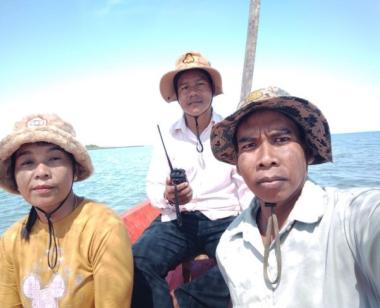
Through her consistent engagement with local authorities and CFA authorities, mangrove destructive activities have been halted. As a young woman leader, Seila has become a role model for coordinating collective decision-making within her community. For example, in planning mangrove seedling activities, she worked closely with the outstanding women’s group of the CPA to move the initiative forward without obstruction. This has contributed to the restoration of mangrove territory and improved environmental sustainability. She also provides mentorship to women CPA members, particularly on land rights, as systematic land registration is now underway in her village. Another topic she has supported the community with is the development of a basic understanding of Environmental and Social Impact Assessments (ESIA).Together with CPA members and the women’s group, Seila initiated the development of an eco‑tourism plan for the CPA, which has been formally submitted to the provincial governor. Although she has not yet received an official response, she remains confident that the proposal is being reviewed. She continues to seek support from local authorities to expand livelihood alternatives for her community.
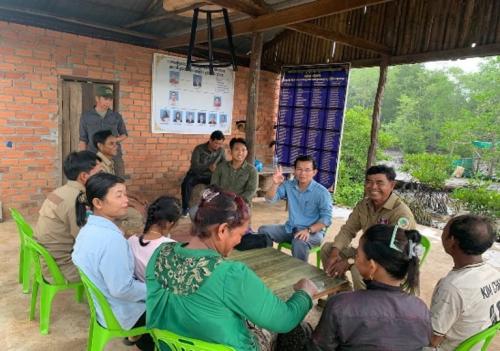
Seila is very proud of her journey as a community activist. She never imagined becoming a focal point capable of organizing and facilitating training sessions, nor earning the community’s trust as a resource person. Today, she plays a vital and respected role in her community, balancing her household responsibilities and farming work with her passion for environmental protection. Therefore, Seila’s journey reflects the broader goals of the SCAEG Project: strengthening community led natural resource protection and increasing women’s participation in environmental governance.