When Livelihoods Secure the Future of Learning

In Anlong Pring village of Kampong Thom province, Hoy Rin, a 42-year-old mother of two boys, has long depended on chicken raising to support her family. Like many other families in her village, one source of income was not enough to sustain her household. This had led her to work for other rice field landowner for seasonal harvesting period and process some fish-related-food to sell locally to meet day-to-day needs.
As a mother who never had the opportunity to complete even primary education, her limited literacy has been a persistent challenge in daily life.
“I, myself, find life challenging when I cannot read or write.
I have to depend on other people to help me, even when buying medicine for my chickens,” Rin shared.
This has been a painful memory for her. These personal challenges remind her that she needs to strive to do everything she can to ensure her children can go to school.
There were times when she couldn’t earn enough to afford school supplies for her sons. In those moments, she sought help from her siblings who live nearby to buy study materials enough for just a year of school.
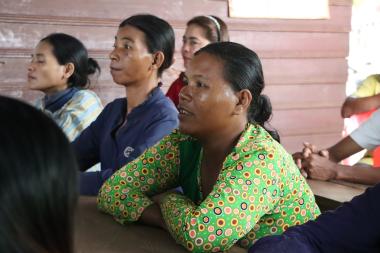
Recognizing the struggles of farmers like Rin, COFAP, ActionAid Cambodia’s partner organization, identified her as one of the target farmers for livelihoods improvement initiative under the CCOSC project. Although she had been raising chickens for years, the opportunity to learn new techniques based on agroecology principles and connect with other farmers filled her with excitement and hope, uniquely different from her most known traditional technique. She truly enjoyed learning and sharing experiences with others.
I really like learning. I’ve never known we could use certain natural remedies to treat chicken mouth swelling and such, Rin expressed with great enthusiasm.
Often times, the facilitators used pictures or delivered the techniques verbally so she could understand and follow along.
In addition to the technical training, Rin was also among the farmers who received small grant support. Through this initiative, she received nine hens in addition to around ten chickens she already had at her house. She was very happy with this new batch of chickens, which were healthy female hens bought from the local area. The project learned that locally bred chickens tend to be more resilient to the local environments, which Rin was very thankful for.
With these new flocks, her passion was reignited. Given the current rising market price of chickens, she feels hopeful for the future. She also shared that having chickens in hand allows her to convert them into money more quickly during emergency needs rather than looking for other jobs. She now hopes to increase her productivity and make chicken farming her main source of income.
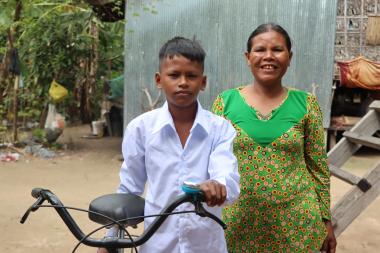
Her youngest son, Sopheak, who is 13 years old, always try to help out his family by catching some fish after school. When he brings fish home, she would make Prahok (fish paste) to sell, and that helps them earn a little extra income. Now that Rin is focusing more on her chickens, she hopes her family will earn enough for her sons to focus fully on their education.
Earlier this year, Sopheak received a bicycle as a scholarship OOSC under the project as well.
“Without the bicycle, I wouldn’t be able to go to high school. It’s too far,” he answered with honesty.
The high school that he starts soon in the upcoming November would take him an hour on foot. Although he sometimes hesitates about continuing his education, Rin is determined to support both of her children as much as she can.
She continued,
No matter how far my children want to go on their education journey, I am committed to supporting them because I don’t want them to experience the kind of difficulties I have been through, of not being able to read or understand what others can.
Her story reflects the spirit of love for learning and unwavering determination for her children’s education.
When women like Rin gain the tools and confidence to build stable livelihoods, the path to education and opportunities for the next generation becomes stronger.